Business Setup & Formation
Dubai Import & Export Business License
Depending on the scope of their operations, licensed UAE Forex brokers undergo thorough scrutiny to ensure they provide reliable services to clients. Offshore brokers are permitted, but they must appoint a local representative and demonstrate adequate liquidity. A Forex broker without sufficient capital poses a significant risk to their business and clients.
Dubai’s mainland has long been a hub for import-export businesses. Strategically located as a gateway between Europe and East Asia, Dubai has become a key center for trade in the region. Over the past several years, import and export companies have thrived, benefiting from Dubai’s advantageous location. The government also provides e-Services for import-export businesses, streamlining operations and enhancing efficiency.
Anyone engaged in import and export activities in Dubai must register with Dubai Customs. Dubai Customs now offers online services, including the Mirsal 2 system for electronic declarations and permits. The Mirsal portal provides guidance for new import-export businesses in Dubai. While registration can be initiated online, all supporting documents must be submitted in person to a Customs officer. All goods imported into or exported from Dubai are subject to inspection to ensure they do not fall under prohibited items.
Dubai Customs has partnered with DP World and JAFZA (Jebel Ali Free Zone) to create an online portal for Dubai trade, consolidating all import-export and trading procedures in one platform. Additionally, international agreements between Dubai and various countries have reduced customs duties on goods imported from or exported to those nations.
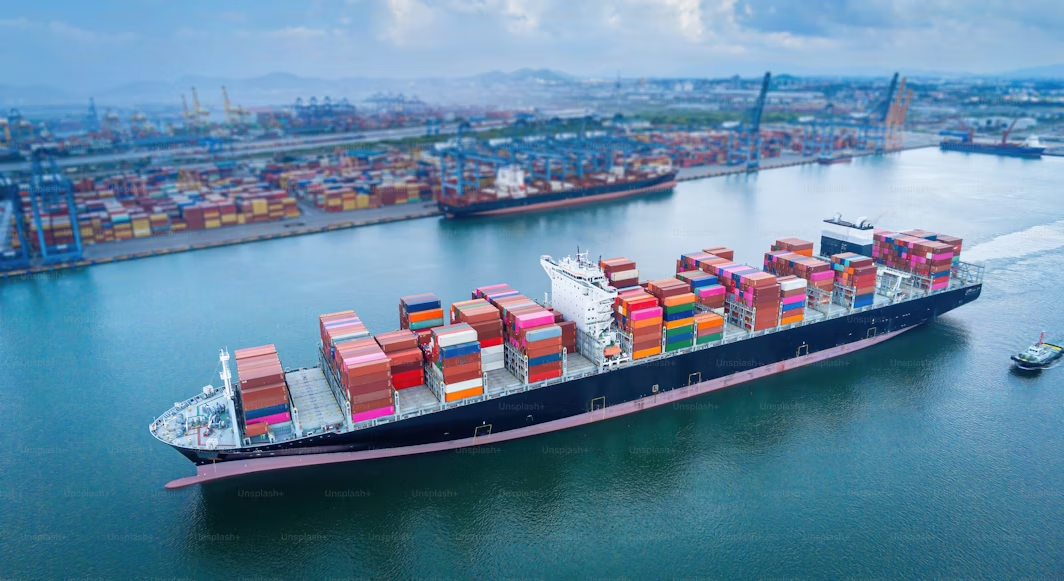
Dubai Export:
Export refers to producing goods in one country and legally selling them in another. It plays a vital role in a country’s international trade. Goods exported from any UAE Free Zone are exempt from customs duties. Although Free Zones are part of the UAE, they fall outside the jurisdiction of UAE Customs.
Export Procedure :
To export goods, the exporter must follow these steps: submit the required documents to the Customs Office, pay the export declaration registration fees, and then obtain the Customs declaration certificate.
Required Documents:
Instructions for the Declaration of Goods (IDG) or an approved export declaration certificate in the name of a licensed company by the relevant licensing authority for airport customs entry points.An export permit from the competent authorities if the goods being exported are restricted.Sales invoice showing total quantity, detailed description, and value of each item from a licensed company, addressed to a company outside the country.Declaration for customs clearance of the goods.
Dubai Imports:
Importing refers to bringing goods into the UAE from a foreign country or another emirate while complying with all legal procedures, documentation, permissions, fees, and licensing requirements. With a valid trade license issued by the UAE authorities, any business can become a registered importer with Dubai Customs.
Process of Importing Goods in Dubai:
When the vessel arrives, the importer must contact the shipping agent to submit the original Bill of Lading and pay any applicable fees. The shipping agent will then issue a Delivery Order, which the importer must use before its expiry date. Typically, the Delivery Order is issued 3–4 days prior to the vessel’s arrival.
For Dubai Customs clearance, the importer logs into Dubai Trade to create and submit the Import Declaration application. Customs duties and other fees are paid online through a CDR account or e-payment. Special approvals are required for restricted or duty-exempt goods before submitting the Import Declaration.
Dubai Customs verifies and evaluates the submitted documents to collect duties and approve the import. In some cases, Customs may require inspection of goods by the relevant authority before releasing the cargo.
The importer can track the vessel status using the Vessel Enquiry e-service and monitor container discharge via the Container Enquiry e-service. After discharge, the importer appoints a transport company to collect the cargo/container from DP World using the Hauler Nomination service on Dubai Trade. An Equipment Interchange Receipt (EIR) is issued to the hauler for each container removed from Jebel Ali Port.
If inspection is needed, the hauler must take the container to the competent authority’s inspection area. Only after receiving inspection clearance can the hauler exit JAFZA by presenting a copy of the EIR.
Documents Required for Importing Goods into Dubai:
To import goods into Dubai, the exporter must provide a commercial invoice addressed to the importer, detailing the total quantity, description of goods, and the value of each item. A certificate of origin, approved by the Chamber of Commerce in the exporting country, is required to verify where the goods come from. Additionally, a detailed packing list specifying the weight, packing method, and HS code for each item in the shipment must be submitted. If the goods being imported are restricted or duty-exempt, an import permit from the relevant authorities is also necessary.
Dubai Import and Export License
If you plan to start a business in Dubai focused on import and export, obtaining a valid import-export license is essential. Dubai Customs has made the process simpler, and the license can be applied for online. However, if you deal with restricted or special goods, a separate import or export license from the Customs Office is required.
The details shared above can assist you in understanding the import-export process in Dubai. For those looking to establish an import-export business, our team at Riteway Consultants can provide complete support. Our professionals guide you through all business-related queries and help with company formation in Dubai and across the UAE.